Review Pettit Vivid Epoxy Marine Primer or Interlux Epoxy Primekote
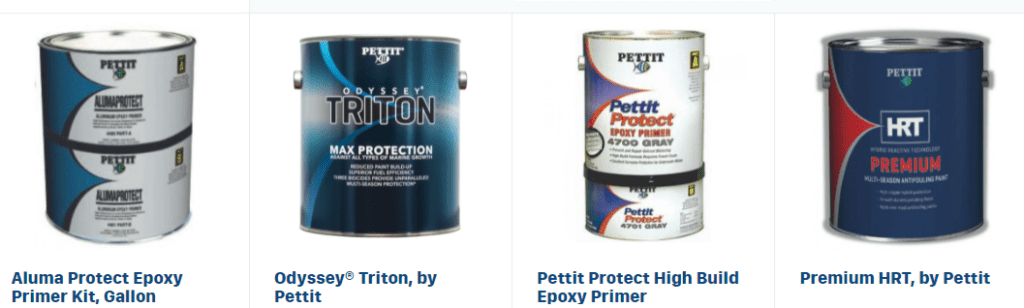
Customer Reviews of Pettit Paints
Pettit Marine Paints offers a number of high-performance products, from topside paints to antifoulant lesser paints and everything in-between, some brand names include Trinidad, Easypoxy, Odyssey, Triton, and Black Widow covered. Pettit Paints constitute is located in Rockaway, New Jersey, and its products are bachelor throughout the world.
Below are some of the Pettit Reviews we have received from customers through Verified Reviews, an independent rating service.
Pettit Vivid Reviews
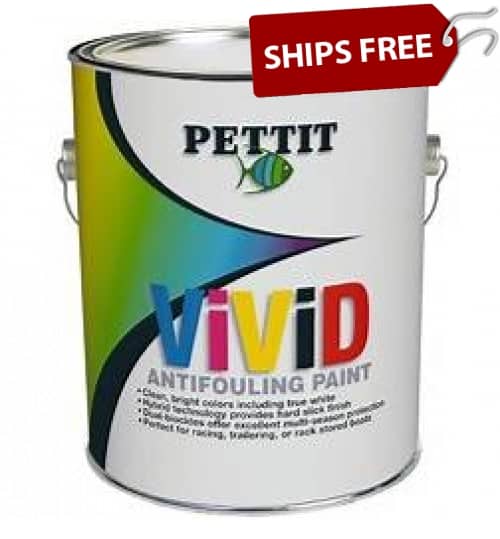
A very effective bottom paint for the Swell Lakes. – David B.
Compromise between more than ablative and full hard paint for your hull. – Bert R.
I haven't used the paint yet only I wait information technology volition alive upwards to its reputation. – Tom Z.
The best paint.
Pettit Trinidad Pro Reviews
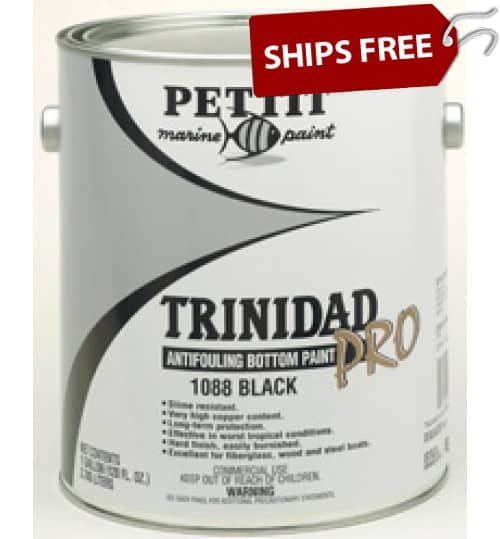
We first used Pettit Trinidad Pro on my sail boat in 2014. At present in 2021 a total 7 years later we have to repaint. Probably should have repainted last year but regardless of 7 years or only six years of effective coverage its astonishing. Nigh no bottom growth for half-dozen years – WOW. This would be my permanent choice for bottom paint if Pettit were non finally giving upwards the fight. – Michael H
The delivery was fast only the gallon can was badly damaged due to the weight of the product inside. Null incorrect with the contents and the package did have a red warning characterization Do Not Drop. Can't arraign the store, just the shipper. – Robert M
Used before information technology's great.
Pettit Black Widow Bottom Paint Review
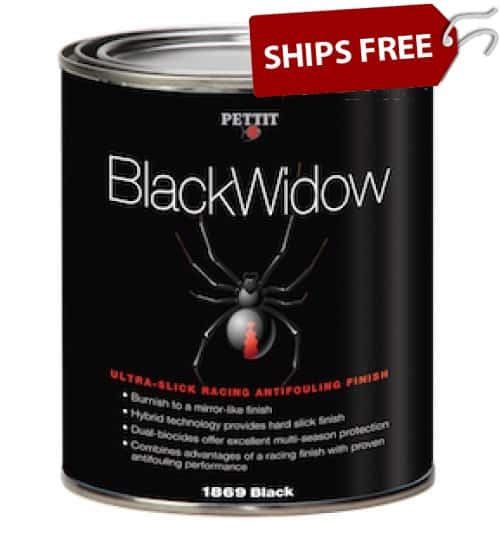
Pettit Blackness Widow Racing Antifouling, Black
Went on thin just easily. Definitely needs two coats as the sanding/buffing to bring out the best in the product was worn through on edges/thin spots. Seems very slick….first time trying this i.
I will know more later in the summer and beyond. I am hopeful that it is as proficient it sounds. I tried a roll and tip method for applying the two coats of paint, and it sets up as well quickly for that, then I think it would be practical better by either roller or castor solitary.
Pettit HRT Paint Reviews
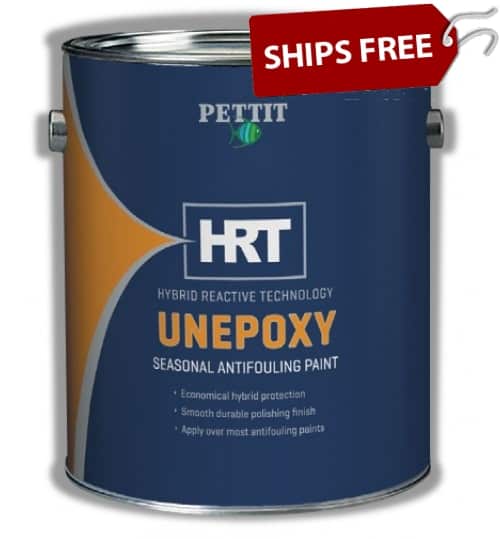
I love this paint. This is my fifth yr, and only take had to do some touch up on the boat lesser. Excellent. – Fran Z.
Love this product take used it many times earlier on several cruisers and fast boats e'er profoundly impressed with the outcome.
Antifouling paint can be applied to many dissimilar substrates including wooden boats. What is the recommended procedure for preparing the surface? Is a primer needed? What pigment should I apply? This article should respond all those questions. The Bottom Paint Store has 3 water-based antifouling products: Aquagard, Body of water Hawk Monterey, and Interlux Fiberglass Bottomkote Aqua.
Aquagard Water-based Antifouling Lesser Pigment
When applying antifouling paint to wooden boats, primer is optional. Antifouling pigment can seep into the woods grain and create a strong bond. Usually, the first coat is thinned ten% to help in penetrating the forest grain. Then the subsequent coats tin be applied ordinarily.
If adhesion is a major concern, then primer will promote adhesion. In that location are 2 Aquagard primers to choose from: 181 Solvent based primer and 190 H2o based primer. They both achieve the same chore, only the water-based version has less VOC's (volatile organic compounds). If y'all choose to employ a solvent based primer and so a water based paint, make certain the primer is completely cured before proceeding. You tin can read the total application instructions on the Aquagard product page.
Monterey Self Polishing Solvent Free Bottom Paint
When applying Sea Hawk Monterey to a woods hull, no primer is needed. Yous can use the aforementioned method of thinning the production to allow it to seep into the forest grain. If the wood can have more paint after the first coat, you can echo the process a 2d time. Hither is the footstep by step process for Monterey:
Step 1 – Clean SURFACE
Surface must be make clean, dry and gratis of contaminants.
Step 2 – SAND & CLEAN
Sand to a uniformly frosty, dull looking surface with 80-100 grit (no finer) sandpaper; remove any residue.
Pace 3 – Employ ANTIFOULANT
Utilise two coats of Sea Hawk antifouling by castor, roller or spray. Use first coat thinned 10% and let dry overnight. Apply ii more coats of bottom paint allowing 3 to 6 hours between coats and a minimum overnight dry.
Interlux Fiberglass Bottomkote Aqua
BARE WOOD: Information technology is essential to remove all contaminants from the surface prior to sanding and overcoating.
Sand with 80 dust paper.
Clean with Special Thinner 216. Repair whatever defects with Watertite Epoxy Filler.
Lightly sand and wipe clean. Surface must be free from all contamination.
Fill seams, if necessary, with Seam Compound Chocolate-brown 30.
Use showtime coat of Fiberglass Bottomkote® Aqua thinned with clean water (exercise not add more than than 10% by volume).
Customer Reviews of Ocean Hawk Paints
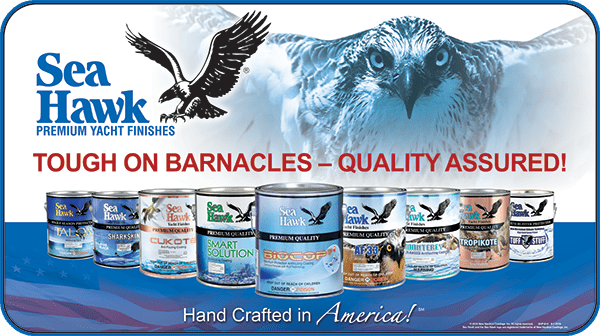
Body of water Hawk Paints is an American manufacturer of premium performance antifouling paints and coatings, dedicated to bringing the highest quality products to boat enthusiasts.
Bottom Paint Store is a proud Sea Militarist paints distributor, and we have received a lot of Verified Reviews from actual customers using Sea Militarist marine paints. Although the reviews are listed on each of our production pages, we thought it would be helpful to share a collection of some of the reviews on one page.
Sea Hawk Aluma Hawk Paint Reviews
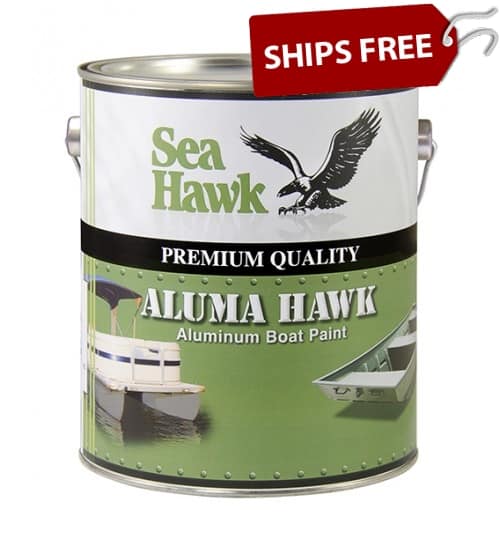
Seahawk aluminum boat paint is perfect. No primer required. I've used this paint for ii years with excellent results. – William Eastward.
Great product. – Kody L.
Very impress with the paint roofing, 1 1/2 half gallon for my 20 anxiety pontoon.- Cristian V.
Adhesion seems better than almost paints even when not fully cured. Liking what I see then far. – Marking L.
Dandy paint and easy to utilise. Took a little fleck longer to dry than expected, but that was by and large a humidity result on my terminate. Looks bully and it will buy it once again if I need some more for anything.- Eddie C.
Haven't used information technology however only I ordered it because of its good reviews on YouTube.- Jesse H.
Great production. Bruce D.
Fantabulous production for my Jon Boat- Dennis Due east.
Looks bully! Sam B.
I learned several things most this paint; one. Make sure you apply information technology soon after yous receive it. If information technology's going to sit for a couple of weeks, y'all will need to stir information technology very well to break upwards chunks in the bottom of the can. two. Two quarts are not enough to paint the bottom hull of a 14-foot aluminum Jon boat. Information technology volition take at least 3 quarts for 1 coat. 3. Wear gloves. If you get this on your hands, information technology volition have longer to get off than regular paints. four. It takes a week to cure. It says so on the can and I can run into that. Even though the paint appears dry later on a few hours, it's still tacky. So, you will demand to accept some patience. Seriously, this is non like painting other objects like wood. Read all the directions and deed accordingly. Continue in heed that this is for boats that volition routinely be out of the water. Information technology has no anti-fouling properties, and that's OK if you're non going to leave information technology in the h2o. Personally, I alive in a desert area of Arizona, so non an issue for me. – Kevin P.
The best production for aluminum boats.- Robert D.
Purchased an older small used pontoon for our no motor lake. The bottom grime was like cement and I eventually used a sand blaster wand attachment to my power washer to clean of this crud (unreal). Chose Aluma Hawk paint for the sand blasted pontoons and it worked great. This paint needs to be used in a WELL ventilated area!!! I was outdoors painting with a roller on a calm morning and decided to wait till the air current picked up to terminate. Tough durable and easy to use. The green makes it look like its from the armed forces surplus! Honey information technology. Certainly the fish volition exist confused. LOL.- Keith B.
Smooth application.- Brad H.
Very good paint. – Chris T.
I used a roller went on smooth. – Roger C.
The paint lucifer was pretty close to what the previous owner said he put it on the gunkhole… I only did the transom and some touch upward on the sides. Expert quality paint for an aluminum boat.- Rich H.
I purchased the Aluma Hawk 7031 calorie-free grayness – 1 gallon, which gave me ii coats on the bottom & 1 coat inside. The manufactory didn't recommend spraying the paint, and so i rolled it & brushed it on. The paint dries speedily, so you accept to work fast to maintain a wet edge. I did small sections at a fourth dimension to make sure I got even coverage. – Russell S.
Haven't used information technology yet. – Joe S.
Dearest this paint. I painted my jon boat years ago with this stuff. It holds up, doesn't fall off or fade. Added pods to my gunkhole and had to become another quart. The color matched actually well.- Steve One thousand.
Great paint, just needs to exist shaken before shipping.- Greg M.
This paint if fantastic! It adhered to my gunkhole very well and it only needed one coat to encompass evenly. – Arnold B.
Met all my expectations for painting exterior of houseboat. I strongly recommend!- Marsha One thousand.
Best I always used on alum!!!!!!!!!!!!!!!!!!!! – Herman B.
The Value is in the Lasting Performance and then I shall encounter. Putting it on, one NEEDS to KNOW what they are dealing with BEFOREHAND as far every bit Application, in knowing this project should come out perfect. Price of this product should be determined by it's worthiness over fourth dimension. Make clean Up exist Certain to use right Measures and Tools.- Jerry H.
Works adept, dries well, one quart did a first and second coat on our jonboat.- Lindsey Thousand.
Anticipating the pigment will be great- Paul M.
Great products. – D. Mendez
Great production. Best lesser paint I have used however. Good ventilation required. -Jon B.
Awesome- Todd Z.
Paint was as advertised. Very pleased with product. Would highly recommend.- Jerry R.
Easy to apply and dried quick, didn't even really need a 2nd coat but put one on anyway. -Sarah L.
Applying the product now and appears to be coating and roofing as described. The painting (chore) isn't complete yet so I tin can't annotate on life longevity or wearing simply satisfied so far. – Jason K.
This appears to be a skillful quality product but is not real user friendly for DIY due to the fumes and the fact that MEK is needed for clean up. – Douglas Fifty.
So far pretty good, information technology's been most six months now since application. I recommend reading the directions very well, it tells yous exactly how to thin and use with the exception of what type of roller to use, I used a 1/4 nap roller simply seemed to proceed pretty thick. I had to thin it a bit more than what information technology said in order get in a flake easier, information technology recommends rolling as best method but I believe spraying would be meliorate. A xvi foot long 5 foot wide vhull took well-nigh a gallon and a half to paint but I believe it is because it was going on pretty thick, to spray it says tin be thinned l% but for roller or brush just 10% which seemed to thick and non much coverage, either way y'all have to movement pretty quick because it will wink pretty fast. Information technology dried to touch pretty quick but due to the thickness from rolling it seemed to take forever to fully dry out and or cure during which time information technology was still pretty soft and hands scratched off. After existence left to sit down and fully cure/harden I will say the stuff seems pretty hard and tough as nails. I used the sand color and if an when the time comes to paint the gunkhole again I would use it again only spray it . I initially bought a gallon and a quart but soon realized information technology was going to be enough so I bought another gallon and nevertheless have nigh half of it left, I applied two coats to the entire boat both within and out.- David P.
Corking- Todd Z.
The paint went on as expected volition accept to wait and see how it holds up.- Howard B.
Sea Hawk Cukote Pigment Reviews
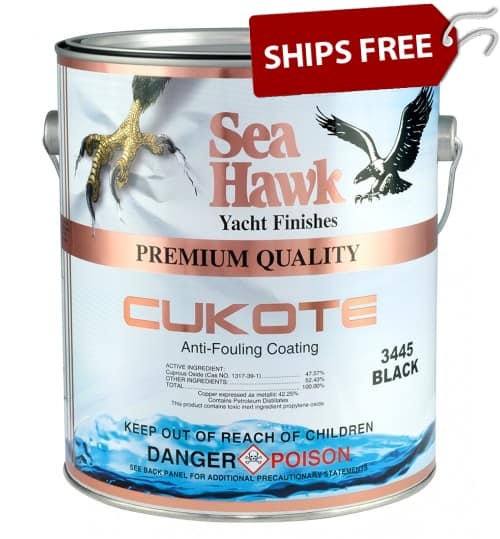
I thought the value was dandy even though I oasis't used it yet due to my marina being backed up with haul outs so Ill probably get hauled out afterward hurricane flavour is over, plus information technology will be cooler then also.- Michael Due west.
The quart I bought was surprisingly heavy but instructions were clear and it was piece of cake to use. Certainly recommend gloves and a disposable castor. – Peter S.
Boat had never been painted and I prepped and applied 2 coats below the waterline and 3 coats on the waterline . Held upwards for 2 years in coastal NC waters . Very little growth to remove . Pressure washer blew most of it off . I would telephone call Sea Hawk Cukote a very good product. – D. Bordeaux
Afterwards more than than 40 years experimenting with different bottom paints on many boats, I'd have to say Sea Militarist paints are the best (least fouling, longest-lasting) ablative paints I have found. – Stephen P.
Quick delivery adept pricing. – Robert S.
I kept my sailboat on the Chesapeake in an area with warm brackish h2o very conducive to barnacle growth. Cukote worked better. – Robert P.
Excellent product. Alfred L.
IMO, this is the all-time bottom paint. Only requires one coat. – Gerald D.
It is on our boat now and we needed some touch up. – Ballad S.
Groovy product to use on boat bottoms. – Jeffrey R.
Ocean Hawk Tuff Stuff Reviews
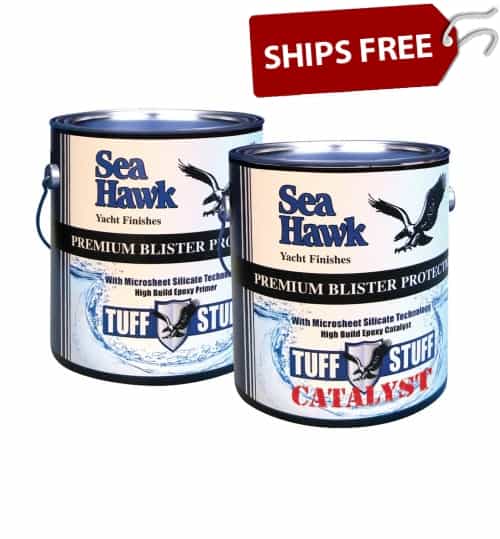
Cleaned the surface, highly recommend a fan or 2 when using. Does have strong odor like whatsoever reducer or thinner. – Peter P.
A loftier quality epoxy pigment. I will order information technology again. – Edward O.
Practical well, pretty happy so far! – Sam B.
Honey it. Easy to work with and tough when cured ! Easy to moisture sand also in prep for color coats ! – James W.
Very like shooting fish in a barrel to apply, just follow the directions. I accept not put the boat in the water even so, merely I don't forsee any problems. – Sharon T.
The Sea Hawk Tuff Stuff was very easy to piece of work with and the 1:i ratio fabricated mixing easy and fault free. It went on easily and stale quickly so that I could utilize ii coats plus lesser paint In one day on a 46ft. Motor Yacht. The Ocean Hawk Tropicoat was also like shooting fish in a barrel to become on ( I recommend thinning as the paint is extremely heavy with copper). It dries quickly and take a difficult service in 15 minutes. I am very happy with both products. – George M.
Great primer, the name says it all. – Eric H.
Very skilful product. – Nicholas C.
Pettit Marine Pigment, was established back in 1923 and is a manufacturer of a variety of boat paint including marine coatings, antifouling boat bottom pigment, varnish, and epoxies.
Hard Modified Epoxies – The active ingredient leaches out while the pigment film stays mostly intact. Leaching Coppers lose functioning as time goes by and must be repainted after dry storage.
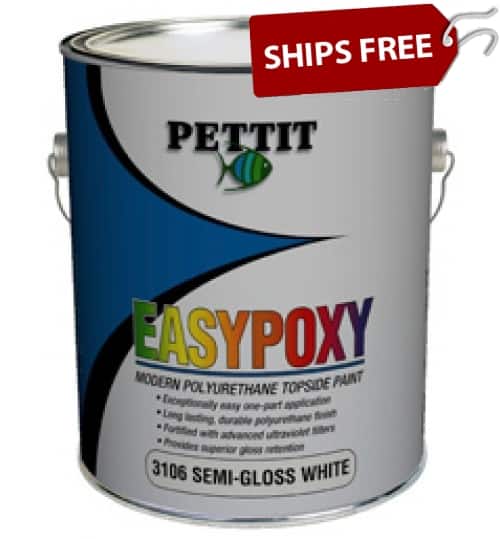
Pettit Easypoxy is an advanced single-stage topside polyurethane and deck enamel. It has a superior high gloss finish and flows well when brush applied. Easypoxy's innovative ultraviolet filters improve gloss retention and heighten polyurethane'due south immovability.
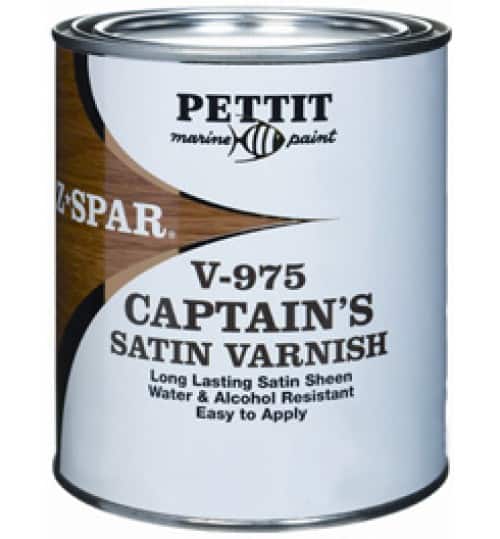
Captain's Satin Sheen Varnish V-975 is widely esteemed for its reliability, multi-purpose awarding, fast-drying capability, and superior durability.
Ablatives – (Ultima and Hydrocoat Technology) Ablative polymers paints habiliment away with employ exposing new biocides, both the biocides and the paint picture disappear over time. Ablative Polymers tin be used multi‐flavor and maintain a more steady functioning throughout their useful life.
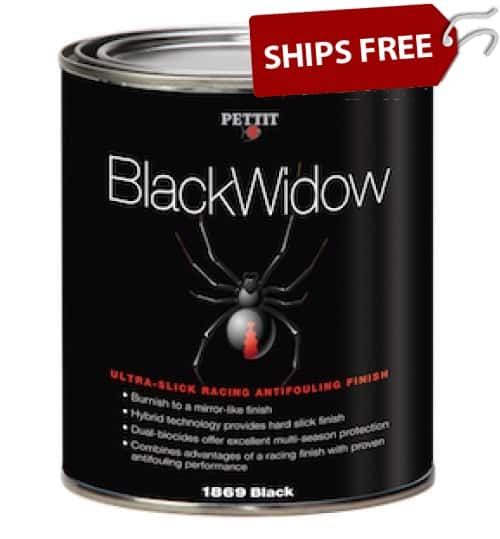
Pettit Blackness Widow Racing Antifouling is the slickest, fastest, ultra-smooth, burnishable racing finish available. Its powerful dual biocides provide multi-flavor protection in all waters. Black Widow is easily practical by roller, castor, or spray and is easily burnishable to a metallic "gun-metal" shine.
Hybrid – (Brilliant Engineering science) Hybrid antifoulings offering difficult paint that does not build up. Hybrid'southward piece of work past leaching out the biocides just as a Traditional Leaching Copper does, but once the biocides are gone, the paint pic volition pause down exposing a new layer of biocide.
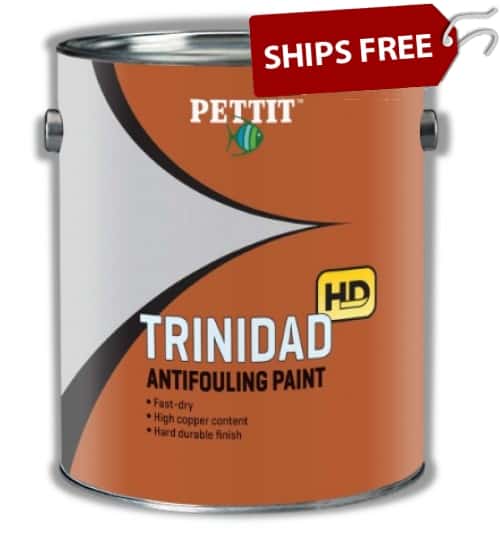
Trinidad Hard disk drive, Multi-Flavour Difficult Antifouling Paint provides excellent, long-lasting protection, even nether the toughest antifouling conditions. Trinidad HD provides dependable in-water antifouling protection while meeting the 330 gram per liter VOC regulations.
Copper Costless – Econea is a non-metal biocide that is extremely effective against difficult-shelled fouling organisms including barnacles, hydroids, mussels, oysters, and tube worms.
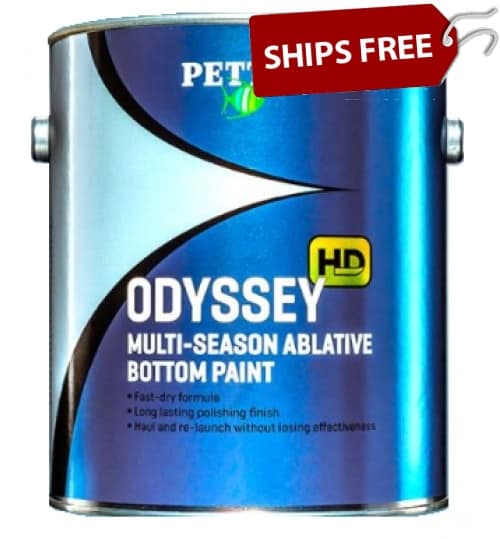
Odyssey Hard disk drive multi-season antifouling combines controlled polishing ablative technology with a high copper content to provide a pigment film strong enough to handle the tough marine environment from coast to coast. Odyssey HD is compatible over most finishes, 50 state V.O.C. compliant, and will not build up over fourth dimension leaving running surfaces smoothen and clean.
White Copper -(Cuprous Thiocyanate)- requires 50% less copper content than the heavy, dark copper used in conventional antifouling paints. They are the merely copper-based paints that are uniform with aluminum.
Low-Density Copper – replaces the core of traditional Cuprous Oxide with environmentally friendly materials found naturally in the ocean.
Irgarol – is used in many dual biocide products, Irgarol is an algicide designed for use in antifouling paints to forestall soft growth such as algae and grasses.
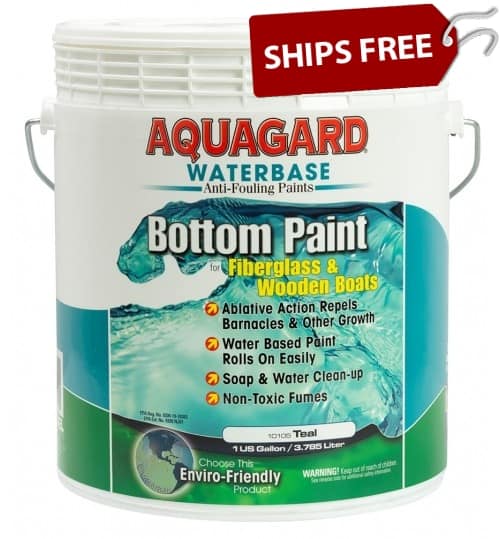
Water-Based (Hydrocoat Technology)- This formula uses water to replace the harsh solvents found in conventional antifouling paints. The product has an extremely low VOC content.
Make clean Cadre Technology – An enhanced paint flick that can reduce the amount of heavy metals released into our waters by up to 90%. These new additives have been peculiarly formulated to provide a more than "finetuned" and consequent release of the biocides from the paint film. This results in a more effective bottom paint that requires lower biocide levels to evangelize full antifouling protection.
Antifouling paint is a type of underwater hull pigment, as well known as bottom paint. These specialized coatings are designed for the outside of the hull of a ship or boat and combat the growth, as wells every bit, the disengagement of underwater organisms, such every bit seaweed, algae, and barnacles. These aquatic life forms bind to the hull and bear upon a vessel's performance and longevity.
Anti-fouling paints are oft applied every bit one component of a multi-layering process which can have other benefits in improver to their antifouling properties, such as acting as a bulwark against corrosion on metal hulls that will degrade and weaken the metallic, or improving the menses of water past the hull of a boat or yacht.
Boaters recognized early on it is of import to keep the bottom of their arts and crafts free of barnacles due to loss of speed and functioning. The key is knowing when to pull your gunkhole out of the water for a new lesser paint application. Ablative paints are typically reapplied every 1–3 years. One mode to ensure you reapply your ablative antifouling pigment when it's needed is by adding a signal glaze or flag glaze.
To apply a signal/flag coat, when yous are getting multiple coats of ablative bottom paint applied to your hull, brand the first coat a dissimilar color. For example, if the lesser is going to be painted blue, make the beginning coat red. When the bluish paint wears off and you run into the red flag coat, it is time to repaint.
If you need farther assistance with your boat painting project experience free to contact our technical team Monday-Fri 8:30-5:00 pm EST.
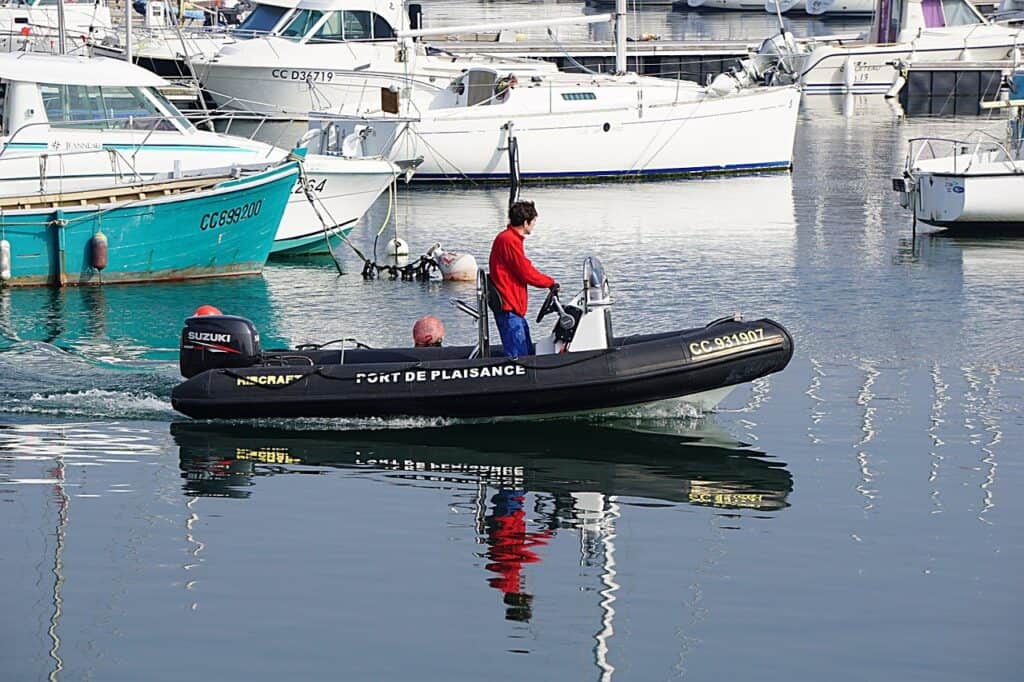
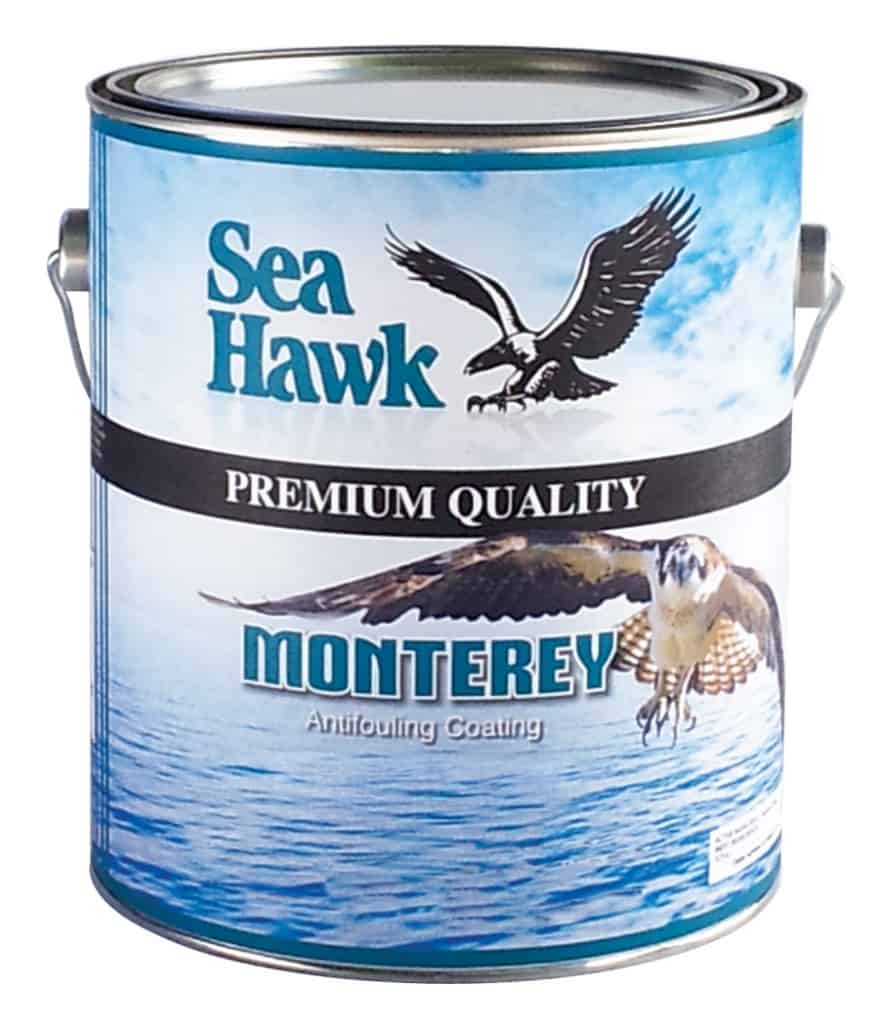
Inflatable boats have become very pop due to their flexibility and diverseness of uses. If your inflatable-lesser dinghy stays in the water for long periods of fourth dimension and you have decided to use antifouling paint yous have a few options. You'll desire to use a h2o-based ablative antifouling such as Monterey by Ocean Hawk, one quart is enough for two coats on an 8-10′ boat. Avoid copper-based pigment on aluminum. Earlier application make clean the area with a maroon Scotchbrite pad for practiced adhesion. These paints tend to be flexible and adhere well to PVC and Hypalon but since they are ablative they tin easily rub off so be careful when storing your dinghy on deck or deflating information technology for longer storage to protect surrounding areas from paint.
If y'all need further assistance with your inflatable boat paint project do not hesitate to contact our technical team Monday-Fri 8:30-5:00 pm EST.
Zinc chromate is used for a wide range of applications. It is an odorless chemical chemical compound primarily used as an industrial paint coating. The compound is a benign coating because it is an anti-corrosive and an anti-rust primer. Information technology is primarily used to coat aluminum and iron materials. Adult by the Ford Motor Company during the 1920s, it was historically used on aircraft past the US armed services during the 1930s and 1940s. It is also widely used equally a paint blanket for the aerospace and automotive industries, also as, a coating for boats, due to its ability to destroy organic growth on the surface and to protect aluminum from corrosion.
Zinc chromate is on the hazardous substance list and regulated by OSHA considering studies have shown that not only is zinc chromate highly toxic, but information technology is also a carcinogen. It has been cited by ACGIH, NIOSH, DEP, IARC, HHAG, and EPA.
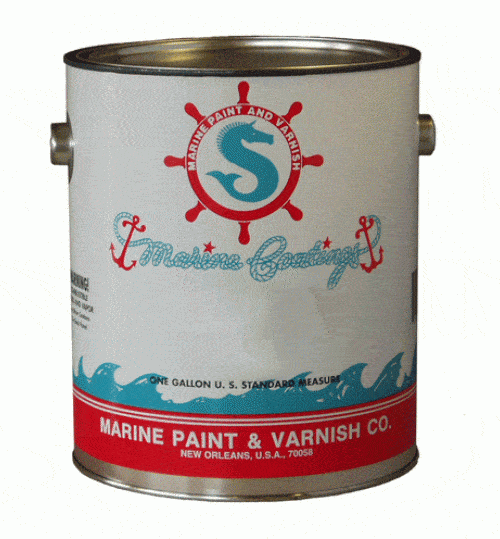
Duralux ZinKromate is a high-quality constructed primer for use in low-cal to moderate marine exposures. It is pb and chromate free and so it is safe to utilize; nevertheless, it offers all of the operation and quality characteristics of zinc chromate without the health and application hazards. It has practiced chemical and corrosion resistance, dries fast, and allows single finish coat coverage when using a like-colored topcoat. ZinKromate performance primer adheres very well to steel, atomic number 26, aluminum, or partially rusted galvanized surfaces.
S-76 Strontium Chromate Tack Coat Primer is for apply on properly prepared steel, aluminum, or galvanized steel. S-76 is an anti-corrosive strontium chromate-based primer that is specifically designed for underwater metallic surfaces including hulls, running gear, and the lower units of outboards and I/O's. It provides an excellent barrier to reduce the pitting of the metallic from galvanic corrosion.
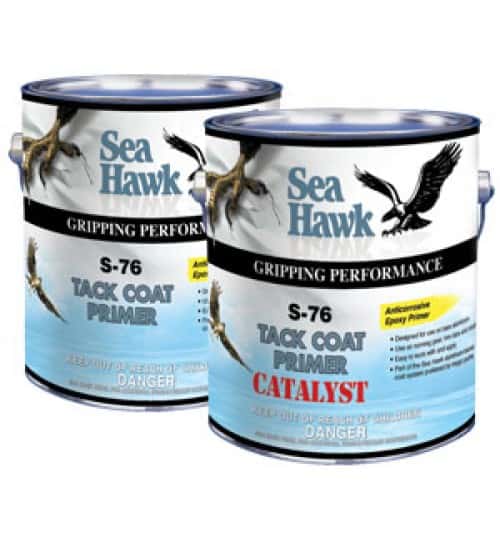
Stromate Chromate tack coat primer may exist used on bare aluminum in conjunction with Tuff Stuff High Build Epoxy to form a barrier for the application of copper-based antifoulants.
If yous have any questions almost ZinKromate primer or Stromate Chromate tack coat primer, please call our technical adept squad at 888-505-2313 Monday to Friday 8 am-5:00 pm EST.
Which method of protective propeller coating is all-time for your gunkhole? While there is no right or wrong solution, there are a few things to consider before making your decision.
Of import questions to ask:
- Exercise yous haul and repaint your boat every year?
- Does the prop see regular use?
Antifouling Pigment – If you answered NO to the second question, you volition likely be better off with traditional antifouling pigment protecting your outdrive. Slick film coatings need to run into regular use in order to repel fouling successfully. And if yous answered YES to the first question, the boosted cost of slick picture coatings may non be worth it for you.
Which antifouling products are recommended for outdrives? Hither are two good options.
Selection 1 – Apply Tuff Stuff epoxy primer (or similar primer) direct to the metal. Paint over with a copper free lesser pigment such as Smart Solution. (It is very of import to merely use a copper-costless bottom paint. Copper-based paints on underwater metals will experience galvanic corrosion.) This choice guarantees the best protection and longest lasting coverage, but the pigment will need to be recoated each season depending on prop usage.
Option 2 – Apply an aerosol underwater metal coating such as Barnacle Blocker or Pettit Barnacle Barrier. These are relatively cheap coatings that could provide a big amount of pay off.
PropGlide™ Propeller and Running Gear Coatings – If you lot answered YES to the second question above then y'all may want to give foul-release systems a try. These are not-toxic, slick coatings that foreclose growth from attaching itself to the prop and running gear, thus improving your boat speed and fuel efficiency. It is important to note that for PropGlide to proceed its slick quality and repel fouling, the prop needs to see regular apply. Without the pesticide coatings of traditional bottom paint, a stationary prop is an easy target for barnacles and other organisms. While slick motion-picture show coatings may not be the solution for all boaters, many have tried it and had dandy success. Annotation what some PropGlide users accept stated below.
"For over a twelvemonth, we at the Big Boat Shed send repair and storage k for vessels upwardly to 60ft have been trialing out PropGlide. Nosotros have found it very user friendly and has a better finish when compared to its competitors. With our tropical humid conditions we could not have asked for a improve drying time then what PropGlide offers. This allows us to plan set up and execute any prop coating task with PropGlide such a breeze. PropGlide is now our chief recommended brand for propeller and running gear antifouling coatings." 3/8/2017
"We applied PropGlide to the propellers and rudders on our 42′ ability catamaran in March 2016. Nosotros take found fantabulous results so far with very little growth actualization on the running gear. We have been able to maintain great boat speed, excellent economy and no vibrations unlike previous years with using other products. Our Applicator has even commentated how much easier PropGlide is to apply compared to its competitors." Mick Malone 9/28/2016
Click this link to compare the price of Propspeed kits and PropGlide™ Propeller Pigment Kits.
Click this link to read nearly Painting an Aluminum Outdrive
The waterline can also refer to anyline on a ship's hull that is parallel to the water's surface when the ship is afloat in a normal position. There are many reasons a waterline needs to be marked, it is a new vessel, the old paint has been blasted off for a new finish, or you've loaded it up with more stuff the original marking is off. Mark the waterline is often met with dread and getting the right line for your bottom paint volition provide stunning results. Getting it wrong, especially when paired with a kicking stripe, volition stand out similar a sore thumb.
If your boat is new, the waterline should be marked on the designer'due south drawing, if that is available. If not, you tin take the measurements from a similar boat. If the boat has been in the water, even a few days, there may exist some slight staining forth the waterline (or only float the gunkhole) that can be marked with a grease marker (best if information technology is full with fuel). Others have advised to throw sawdust in the h2o around the boat. Haul the boat and see where the sawdust has stuck to the moisture hull.
Fine-line masking tape is ideal for this because it has some stretch and conforms very well to hull shape, especially if the hull has a lot of reverse turns. Don't press the tape too firmly yet – you may need to skin it back for modest adjustments. One time you're happy with the whole line, printing the record firmly confronting the hull. Since the gunkhole is already level, all you have to do for the second side is to prepare the level at the correct height and mark the stern with a slice of record or transpose the wax crayon mark.
When the gunkhole is aligned athwartships, set upward the laser tripod, the exact spot is non disquisitional providing the laser beam can see the whole side of the boat (if you lot can see information technology, so can the laser beam). Turn on the laser and adjust the meridian of the beam until it touches the marks yous fabricated at the bow and the stern. If it touches the marker on the bow but the stern is too loftier, lower the jack-stands at the stern or raise those at the bow—vice versa if the stern is depression. Double-check the spirit level in the cockpit to make sure you're not tilting the boat.
For most paints, in society to guarantee efficacy, the just way we recommend changing the color of paints is to mix like paints, ie. Mixing Aluma Hawk with Aluma Militarist. We do not recommend addition of "universal" tints or pigments into our products. Many customers desire an antifouling pigment in a deep, dark blue and this tin can be achieved past mixing blue and blackness.
Gel coats and resins can have a tint added, no more than ane oz per quart, which tin limit the result. Another choice is to mix two gelcoat colors, such as white and cherry for pink.

Antifouling lesser pigment is needed if you shop your boat in the water. If left in the water without protection, marine growth may attach to your boat's exposed hull. Marine growth slows a boat downward and increases fuel consumption. Here are the items that yous will need in add-on to the bottom pigment for the proper anti-fouling lesser paint awarding.
• 60–100 grit – Suitable for the removal of paint or to sand gel glaze prior to the application of antifouling paint.
• After sanding remove sanding residue by wiping with a cloth that has been dampened with the proper solvent.
• Masking Tape – When it is necessary to mask off areas use a high quality clean edge masking tape, specially when the masking tape will be left on the surface for a long time.
• Brushes – For antifouling paints use a natural bristle brush but not necessarily one of as skillful quality every bit you lot would utilize to utilise topside finishes.
• Rollers – Most solvent resistant rollers volition have a phenolic core and will say that they are for apply with oil based paints or epoxies. For antifouling paint and epoxy primers, use a iii/8"-i/2" nap roller.
When applying coatings in cooler temperatures it is important that you meet the minimum temperature requirements. This information can typically be plant in the products technical data sheet, or on the can label.
As a general rule, coatings should be applied in adept weather when air and surface temperatures are in a higher place l°F (10°C) for most paints and 60°F (xvi°C) for epoxy, resin, and gelcoats . Surface temperature must be a least 50°F (10°C) higher up dew betoken. For optimum application backdrop, bring fabric to seventy-80°F (21-27°C) temperature range prior to mixing and application.
Tips:
- Brand sure to store the coatings inside to keep the temperature in the optimal range prior to awarding.
- Do not let coatings freeze, as this may alter the chemical integrity of the products.
- In warm (hot) conditions be sure to go on the coatings out of straight sunlight exposure.
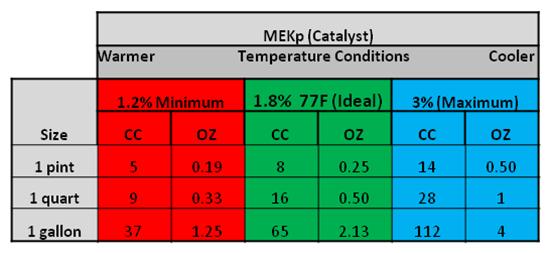
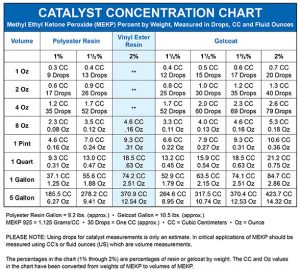
Coatings such every bit resins and gelcoats that require MEKp to exist added for curing volition require more MEKp in libation weather condition, and less MEKp in warmer weather. Run across the guide below, but refer to the specific coating's technical information canvas for detailed data:
 Virtually Antifouling Bottom Paint is marketed toward the harsh conditions of the Caribbean. Just which Antifouling Bottom Paint will piece of work best in Freshwater Lakes?
The brusque answer is this: Antifouling Lesser Paint that works well in the harsh weather condition of the Caribbean will exist more plenty protection for boats in freshwater lakes. The real trick is choosing the paint that will fit your situation the best. Choosing a bottom pigment with more biocide (ordinarily cuprous oxide) will exist more than potent and fight off growth more successfully. Sometimes you don't need to purchase the strongest and the greatest. A pigment with simply the right amount of biocide will exercise nicely and can also relieve a few bucks.
Here are some basic guidelines to help you lot determine which paint is all-time for your boat.
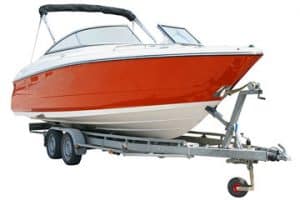 If the boat comes out of the water periodically, such as on a lift or trailer, Ablative Bottom Pigment is the correct choice. When in fresh water, slime and algae tend to be the most concerning. Sea Militarist'due south AF-33 or Talon and Blue H2o Marine's Copper Shield 25 perform really well with these conditions, particularly with the manufacturers boosters added, see beneath.
If the boat never comes out of the water except to be repainted, a Hard Epoxy Bottom Paint volition keep abroad the algae. Sea Hawk Sharkskin is a mid strength Hard Bottom Paint that fits a tighter upkeep.
What about Lesser Paint Additives?
Sea Hawk bottom paint produces a paint additive called Bio Cop TF to help fight against algae and soft growth. This production will boost the effectiveness of your paint's ability to go on the hull free of growth. **Notation: Biocop TF Pint may only exist used every bit a bottom paint additive in the post-obit products: AF-33, Cukote, Sharkskin, Talon, and Tropikote. A booster has restrictions to paint added to and yous should stick with the same manufacturer.
If you however aren't sure what is needed for your boat, check out these other How To Articles:
Do I Need Bottom Paint on My Boat?
What is the Best Pigment for My Boat?
Choosing the Right Boat Pigment
How to Utilize Bottom Pigment Over Existing Lesser Pigment
You can apply paint over Polyethylene, Polypropylene, ABS, and PET/PBT Blends with proper surface preparation and primer.
1. Commencement wipes down the surface with a l/50 Isopropyl Booze such every bit Denatured Alcohol to remove any contaminants prior to sanding.
two. Sand the surface with 60-lxxx grit sandpaper.
3. Wipe down the surface again with fifty/50 Isopropyl Alcohol ( Denatured Alcohol ) to remove all sanding residue.
4. Apply 3M Tape Primer over a small section.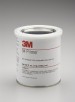
five. Use a small exam section of the desired Topcoat pigment. Since in that location are so many blazon of paints, information technology is recommended to perform an adhesion test on the small-scale area painted. Once the pigment has stale perform a hatch test. Employ a razor bract to cut into the paint and the primer and draw a 2-3 inch line. Y'all should follow this at least 3 more parallel lines nigh 1cm apart. Then cutting 4 more than perpendicular line once again about 1cm apart. Information technology should like a big tic-tac-toe game. Finally, apply duct record firmly and then pull the tape off apace. If y'all accept any pigment or primer on the tape the adhesion is poor. If there is no paint or primer on the tape then it is safe to utilize the primer and paint over the unabridged surface.
This awarding and test tin can be used for topside paints and lesser paints.
There are many different boat paints and qualities, generally the more than y'all spend the ameliorate the results. There are a diverseness of types including topside and bottom paints. Topside paints are meant to be used above the waterline and will not hold up under water. Lesser Paints (also called antifoulants or antifouling coatings) are pesticides that are only used below the waterline when you are trying to finish growth from occurring while your boat stays in the water over long periods of fourth dimension. Come across Related Article>: Do I need Lesser Paint?
Boat Paints
Duralux Loftier Gloss Marine Enamel is affordable and easy to utilise and only recommended for above the waterline or moderate use on the lesser (a day or so in the water, not extended periods). This topside pigment works best in very thin coats; see the prep recommendations found on product page on "how to use" tab. Duralux marine enamels exercise have a color offering in a apartment cease, those are express to their cover-up pigment colors. Marine Alkyd Enamels like Duralux are effective and low cost.
A step upward from the marine enamels are polyurethane enamels. These products such as Blue Water Marine Mega Gloss Polyurethane, Interlux Brightside , and Pettit Easypoxy accept a better flow and gloss.
The best performing and hardest application is either Awlgrip or Awlcraft 2000 . These crave a more than technical application and require the use of proper primers, goad and thinners with each awarding.
Typically when people discuss bottom pigment on a boat they are referring to Antifouling paint . Bottom pigment prevents growth of organisms that attach to the hull and tin affect a vessels speed, performance, and durability when gunkhole is kept in the water for extended periods of time. If you don't have that trouble, you may not need lesser paint. Antifouling bottom paint typically has a flat, tedious finish that is used below the waterline.
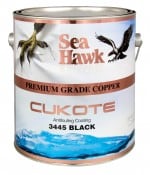 There are mostly two types of bottom paint both of which have several variations that create a multitude of products in the market place. The two different types or categories of bottom paint include hard bottom paint and ablative bottom paint . Related Article> What is the Deviation Between Hard and Ablative Lesser Paint.
So your boat paint choice depends on your budget and which boat pigment colors meet the needs of your boat and usage.
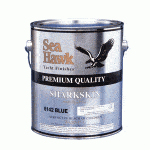
Difficult Bottom Paint
Co-ordinate to Practical Sailor Magazine, March 2013 issue, this topic was discussed. It is generally regarded that after 72 hours of exposure to air that hard bottom paints will oxidize and lose antifouling properties simply test are showing otherwise. Of course you should e'er cheque with the manufacturer of your pigment pick below are the guidelines to reactivate hard paint:
- Launching of newly painted boats may be delayed upwards to lx days after painting without sacrificing antifouling functioning.
- Boats painted between two and 12 months prior to launch date must be scuff-sanded with 220-grit production paper or abrasive pad earlier launching.
- Boats painted more than 12 months prior to launch date must be lightly sanded with 100-dust production newspaper and recoated earlier launching.
- Boats in the water for less than 24 hours (due east.1000. for in-the-water water testing) should exist pressure washed lightly to remove clay, salt or other contaminants and allowed to dry out. These boats should even so be considered newly painted and may be launched up to sixty days after the date of painting.
- Boats in the water for more than 24 hours, but less than 30 days, should exist pressure washed when hauled, and then lightly sanded with 220-dust production paper immediately before re-launching. If necessary, launching may be delayed up to 60 days later the bottom has been sanded. Note: Boats re-launched within 72 hours of haulout practice non demand to exist sanded before launching.
- Boats in water for more 30 days should be pressure level done when hauled, lightly sanded with 100-dust production newspaper and recoated with antifouling paint, even when re-launching volition accept place within 72 hours.
If there isn't enought hard lesser paint on the surface it could flake off with sanding due to the sparse layer.
A lot of factors contribute to what paint is best for your boat:
Are you painting the entire boat, or just the bottom? Is the boat in fresh water or salt h2o? Is your boat trailered?
What is on the bottom of the boat now: bottom paint, topside paint or gelcoat? Once an antifouling bottom paint has been applied only antifouling paint tin go over it (unless you remove it). Gelcoat application is recommended over fiberglass, most resins and gelcoat. Information technology can accept difficulty adhering to other surfaces.
For topside only the Duralux Marine Enamel is an economical choice. It has several colors to choose from and features piece of cake application.
Gelcoat is commonly what is "original" to most boats; a bass gunkhole will have metal flake mixed in. We sell metal flake that can be added to gelcoat or paint but we don't sell whatsoever with it already mixed in.
Ablative bottom paint can assistance with the slime, will vesture away slowly over time, and information technology is suitable for trailered boats. Bottom paint is applied beneath the waterline simply.
If you need assistance selecting the right boat pigment for your needs feel costless to telephone call our technical support team Monday-Friday 9am-5pm EST 888-505-2313.
 Typically when people talk over bottom pigment on a boat they are referring to Antifouling paint. Bottom paint prevents growth of organisms that attach to the hull and can affect a vessels speed, operation, and durability when boat is kept in the water for extended periods of time. If you don't have that problem, y'all may non need lesser paint. Antifouling bottom paint typically has a flat, tedious cease that is used beneath the waterline.
If you don't have a growth problem or would like a nice shine to your boat'southward lesser look to our other items like gelcoat or a topside paint for moderate water exposure or an aluminum pigment with no antifouling agents. Gelcoat adheres to most gelcoats or fiberglass/resins, see how to utilise gelcoat . A gunkhole bottom with antifouling will need to have it removed via sanding, sandblasting or bottom pigment remover before a different type of paint will adhere.
There are mostly ii types of bottom pigment both of which accept several variations that create a multitude of products in the market place. The 2 different types or categories of bottom pigment include hard lesser paint and ablative bottom paint .
Hard Bottom Paint vs. Ablative Bottom Pigment
Hard bottom pigment is lesser paint that is a hard modified epoxy. After you use hard lesser pigment it is very durable and does not wearable off. Difficult bottom paints typically accept a college ratio of pesticides (usually copper) in them that are exposed in the outer surface of the bottom pigment coating. As time goes by, the blanket oxidizes and becomes less effective in combating marine growth. Hard bottom paint is generally used on boats when the gunkhole sits for long periods of time without moving at all, or at that place is little movement of water (current/ tide) around the boat. Y'all should not utilize a hard paint if you boat comes out of the h2o such equally on a trailer or a lift. After 72 hours, the hard lesser paint will oxidize on the outer surface from the air and becomes ineffective. If you are trailering your boat, or keep information technology on a lift you should e'er use ablative bottom paint.
Ablative bottom paint , besides known every bit self- polishing lesser paint, is softer and allows the coating to habiliment off at a controlled rate. Much like a bar of soap, one time the boat moves in the water or there is a electric current and or tide, the outer layer slowly wears abroad. The wearing abroad of the self-polishing lesser paint allows for new, unoxidized pigment to be exposed. Therefore, if y'all are trailering your boat, or it comes in and out of the water for any reason, the pigment will oxidize inside 72 hours. However, once placed back in service, that oxidized ablative pigment wears abroad and exposes a new fresh outer coating with active protection. Ablative bottom paint is a newer technology then hard paint. It is the preferred bottom paint of most users since it typically lasts longer and continuously exposes a new active outer coating that protects against marine growth.
How long does bottom pigment last on a gunkhole?
In full general, you should apply boat bottom pigment one time a year, notwithstanding; some bottom paints can final for 2 years. If your boat is kept in the water or you utilize information technology regularly, you you accept information technology checked annually to determine if it requires a new lesser paint coating.
For more how to use details see How to apply lesser pigment to bare fiberglass or How to apply lesser pigment over existing lesser paint.
How much does it cost to bottom paint a boat?
The toll to pigment the lesser of your gunkhole depends on a number of factors including the size of your boat, the paint you cull and whether y'all use a primer or non. Other factors include whether you will paint your boat or rent someone to paint information technology. For example, Biocop TF past Sea Hawk, is a popular bottom paint and currently costs $275.77 a gallon and provides theoretical coverage of 315 square feet per gallon. If the lesser surface of your boat is 700 square anxiety you would theoretically demand to purchase three gallons (Biocop is not offered in quarts) at a total cost of $827. 31 for the three gallons.
That may seem expensive for paint, however boat bottom paint uses antifouling properties in order to protect the boat's bottom from organisms found in saltwater and other elements.
For information on calculating how much paint you need to paint your boat lesser you can refer to our Lesser Paint Computer.
If you do not have whatsoever coatings at all on the lesser of the boat, we suggest to sand the pontoons with 80 grit and and so apply Tuff Stuff High Build Epoxy. It is a water tight barrier coat designed for apply under the waterline and with aluminum hulls. Tuff Stuff will insure that y'all protect the aluminum from corrosion, and also assist in the adhesion of the antifouling paint. Use ii coats. You tin can apply the 2nd coat within a couple of hours of the get-go coat. See detailed instructions at " How to Apply Marine Epoxy Primer".
 After yous utilize Tuff Stuff marine epoxy primer on hull, exist sure to use an aluminum prophylactic antifouling pigment. The lesser paint needs to be applied the aforementioned day as the Tuff Stuff marine epoxy primer. Antifoulants in general are designed to repel difficult growth. For soft growth you should take an additional biocide that assistance with the algae. Colorkote is an excellent antifoul for aluminum pontoons used in common salt h2o and/or fresh water. For a less expensive option, meet Smart Solution Metal Costless Antifouling pigment.
Alarm: Yous should only use an aluminum safe antifouling like Smart Solution. Using whatever other blazon of copper based antifouling could severely damage your pontoons and will cause corrosion, pitting and eventually holes in your pontoon boat.
If you do non need antifouling paint and are in fresh water, we suggest using one of the products located in the "How to Paint an Aluminum Jon Gunkhole" article.
Links:
How to Video:
 After farther review on the operation of Eco-Clad equally a lesser pigment, we are NOT offering this product to our customer base of operations. Eco Clad is engineered to support a natural beneficial biofilm (slime) on the coated area. However, we have heard several complaints near the products' poor operation when information technology comes to keeping growth off the boat. The company has done a great job of marketing Eco Clad everywhere, and claims meliorate fuel economy and faster speeds. This might be true, but performs merely for a few months at best. After that you volition see substantial marine growth and even worse fuel ecomony and speed along with the added costs of a new bottom job.
Our stance and recommendation is to stay abroad from Eco-Clad unless you programme on keeping your boat in fresh water. Your are much amend off using a traditional high quality lesser paint.
Hard Bottom Paint Vs. Ablative Bottom Pigment
Bottom pigment is more often than not used to keep the growth off of the bottom of your boat. There are mostly 2 types of lesser paint both of which accept several variations that create a multitude of products in the market place place. The ii unlike types or categories of lesser paint include a hard bottom pigment , and an ablative bottom paint .
 Hard Bottom Pigment is bottom paint that is a difficult modified epoxy. After you apply a hard bottom paint it is very durable and does not habiliment off. Hard Bottom Paints ypically take a higher ratio of pesticides (unremarkably copper) in them that are exposed in the outer surface of the lesser paint coating. Equally time goes buy, the blanket oxidizes and becomes less constructive in combating marine growth. Hard lesser paint is mostly used on boats when the gunkhole sits for long periods of time without moving at all, or in that location is niggling movement of water (current/ tide) effectually the gunkhole. You should not use a hard paint if you boat comes out of the water such as on a trailer, or a elevator. After 72 hours, the hard bottom paint will oxidize on the outer surface from the air and becomes ineffective. If you lot are trailering your gunkhole, or go along it on a lift you should e'er utilize an ablative lesser paint.
 Ablative lesser pigment , too known as self- polishing bottom paint, is softer and allows the coating to wearable off at a controlled rate. Much like a bar of soap, once the boat moves in the water or in that location is a current and or tide, the outer layer slowly wears away. The wearing abroad of the self-polishing bottom paint allows for new, un-oxidized paint to exist exposed. Therefore, if you are trailering your gunkhole, or it comes in and out of the water for whatever reason, the paint volition oxidize within 72 hours. Still, once placed back in service, that oxidized ablative pigment wears away and exposes a new fresh outer coating with agile protection. Ablative lesser pigment is a newer technology then hard pigment. It is the preferred bottom pigment of most users since it typically lasts longer and continuously exposes a new active outer coating that protects against marine growth.
Related Articles and links:
Hard Lesser Paint
Ablative Bottom Pigment
Applying Lesser Paint
Run into the table below for a list of most lesser paints and how they compare past the peak manufacturers.
Bottom Paint Cantankerous Reference Guide.
These bottom paint comparisons are the best lucifer ups of antifoulant brands and type by manufacturer. This data is the sole the opinion of world wide web.BottomPaintStore.com. Please consult each manufacturer for more than specific product information and comparisons.
*These items are currently out of stock from the manufacturer and are considered to be on stage out. Availability is very limited.
Epoxy pigment is a latex acrylic substance that may accept a minor amount of epoxy in the mix and provide a tough, durable protective coating that's effortless to maintain. Putting a water-based lesser paint (WBP) over a solvent based primer can be done with some modified application procedures. You exercise NOT want to make the window, or hot glaze the water based paint over the solvent based primer such equally Tuff Stuff high build marine epoxy primer. If you do, it will mud crevice. And so instead of putting on the WBP over the Solvent Primer in the same mean solar day, you demand to await for the primer to totally cure. Then you take to sand information technology with 80 grit sandpaper before use WBP. This is a lot of extra work and very difficult to sand = extremely hard surface. So the best affair to practise when using a loftier build solvent based epoxy is to coat it with a solvent based paint. That way you skip the extra time and labor with sanding.
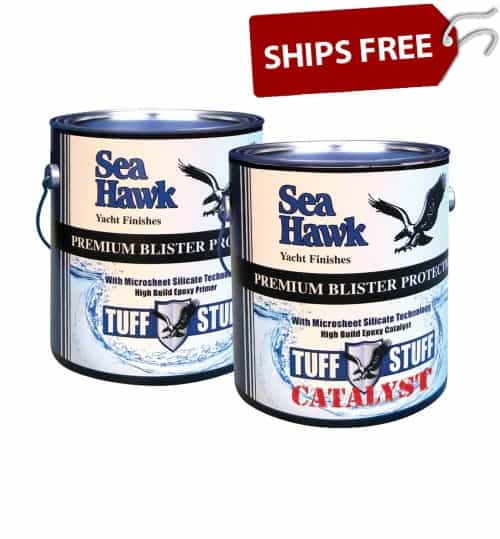

Best Performing Bottom Paint
The best lesser pigment that money tin buy may NOT be the well-nigh expensive. You lot should purchase the lesser paint that works best in your surface area. That volition depend on the temperature of the h2o, tide changes, the nutrients in the water that feed unwanted growth, and many other factors.
The best bottom paint for you volition be the lesser paint that stops the growth and does not break your wallet. If you purchase the best performing bottom for the harshest fouling atmospheric condition and the warmest waters yous would need Ocean Hawk Paints Biocop TF or another Elevation Performing Bottom Pigment . This provides you the absolute maximum protection against hard and soft growth on the bottom of your gunkhole. This solution is recommended for high growth areas, or if yous are trying to goes every bit long equally you possibly tin can between bottom jobs. If you are in cooler climates or lower fouling conditions y'all would Not demand to spend the extra coin on Sea Hawk Biocop TF. A amend choice that is less expensive and will work in these weather is Ocean Hawk AF-33 or the equivalent.
ALUMINUM BOATS: The all-time bottom paint for an aluminum boat or pontoons is a copper complimentary lesser paint. Yous cannot put the paints mentioned above (Copper-Based) on aluminum because they comprise copper and will react like a battery causing pitting (holes) on aluminum. Therefore, nosotros recommend an Aluminum Safe Bottom Paint . A adept option for aluminum is Sea Hawk Colorkote , it is copper free triple biocide paint rubber for aluminum. If the aluminum has never been painted the best practice is to prime number with loftier build epoxy primer like Sea Hawk Tuff Stuff to insure good adhesion and protect against corrosion. If you are painting a pontoon boat for the beginning time – try our Pontoon Bottom Paint Kit.
 The best bottom paint for the outdrives is to brush on Smart Solution. (pint size). If your outdrive has never been painted earlier, you can use Barnacle Blocker Primer for priming the area application of bottom paint. A great value for this is the Premium Outdrive Bottom Paint Kit . If there is already a bottom paint on your running gear, just scuff sand and paint! Another pick is to try an aerosol spray lesser pigment. These are piece of cake to apply.
For outdrives a foul release agent may be the choice for you, see here.
Bottom Paint is formulated to employ via brush or rolller. Nether these normal application methods, there is no demand to thin lesser paint (reduce bottom paint).
Bottom Paint Thinner
There are reducers for bottom paint , merely these are used for spray applications, extremely hot climates (90F+) or if y'all applying to wood. (bottom pigment should e'er be reduced by 20% for the first glaze of bottom pigment on wood.)
When used for these applications, please follow the manufacturers' guidelines. (typically thin lesser pigment no more 10% unless barewood (20%) per application)). Be sure to employ the correct thinner for the bottom pigment that you are using. Do non mix competitive brands.
Don't waste your money on bottom paint reducer unless your application meets these conditions. Otherwise, you are only spending more money thinning your bottom paint and waiting for information technology to dry! Recollect that lesser is not like house pigment, thinning bottom paint means that you are actually spreading less lesser paint over the surface. Bottom pigment needs to exist thick plenty to repel growth as the paint film wears away over fourth dimension.
Source: https://www.bottompaintstore.com/blog/category/bottom-paint/
0 Response to "Review Pettit Vivid Epoxy Marine Primer or Interlux Epoxy Primekote"
Post a Comment